
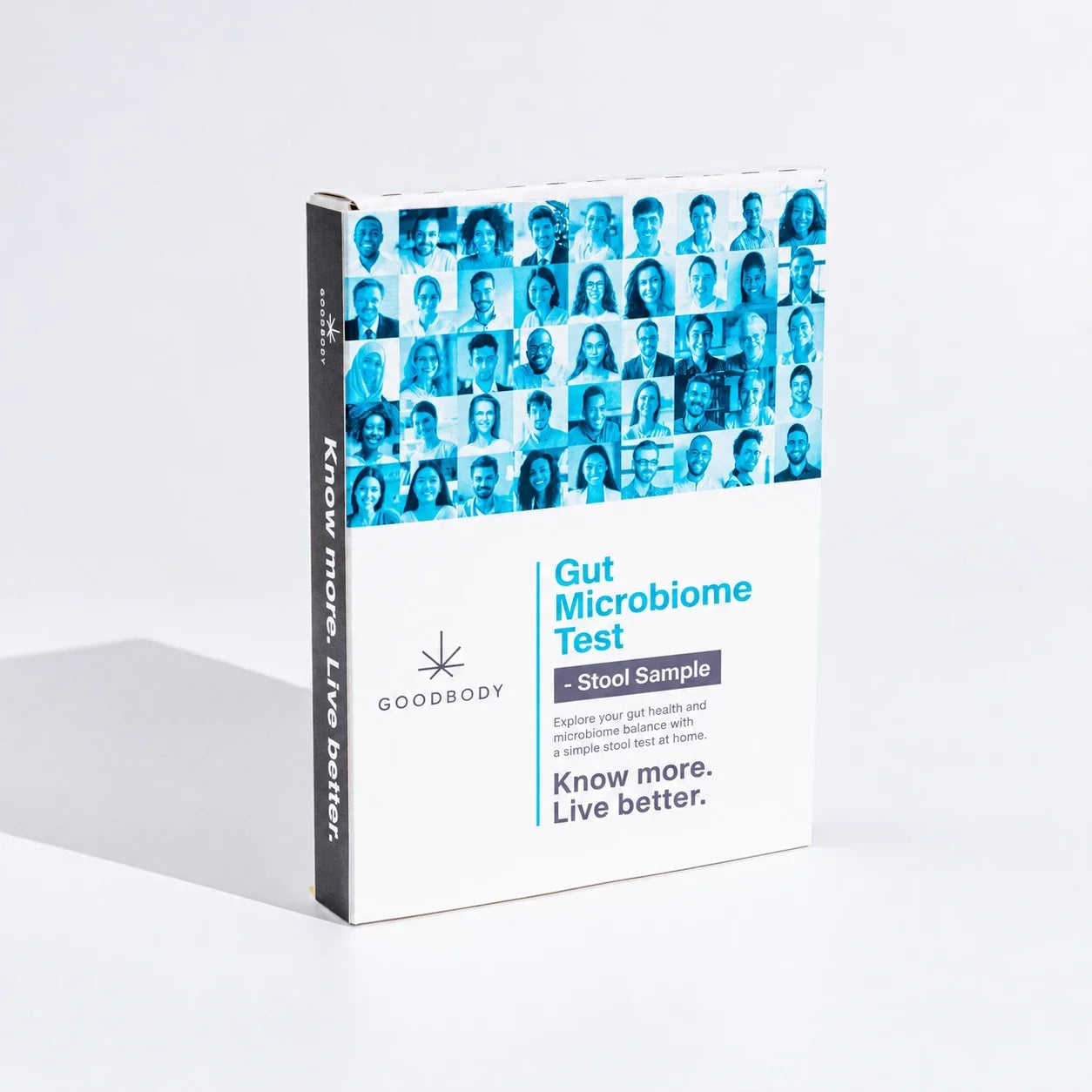
A gut microbiome test uses DNA sequencing of a stool sample to show which microbes live in your gut, how diverse they are and what they are likely to do. It is not a blood test: no blood test measures your gut bacteria. It can be useful if you have ongoing bloating or bowel changes, but it is not a diagnosis, so see your GP about red-flag symptoms.
Searching for a "gut microbiome blood test"? You are in the right place, with one clarification. Blood tests can check things linked to gut health, such as iron, B12 and coeliac antibodies, but the microbiome itself is measured in a stool sample. Here is how a gut microbiome test works, who it suits and what it cannot do.
In this article
What does a gut microbiome test measure?
Your gut microbiome is the community of trillions of microbes, mostly bacteria, living in your digestive tract. Our Gut Microbiome Test sequences the DNA of the bacteria, archaea and viruses in a small stool sample you collect at home. The personalised report covers:
- 3 microbiome health risk scores
- Gut diversity and microbial load
- 11 gut functions, such as breaking down fibre and producing short-chain fatty acids
- More than 60 pathogen groups
- 17 key beneficial microbes, plus a full list of every species found

Is there a gut microbiome blood test?
No. Gut bacteria live in the bowel, so they are measured in stool, not blood. What blood tests can do is check conditions that overlap with gut symptoms. A coeliac screen looks for the antibodies the NHS uses to test for coeliac disease. Iron, B12 and a full blood count can show whether poor absorption or bleeding might be involved. These are separate questions from the make-up of your microbiome, which is why some people use both.
Is a gut microbiome test worth it?
It is most useful if you have ongoing digestive symptoms such as bloating, discomfort or changes in bowel habit and want to understand your gut, or if you want a detailed baseline before changing your diet, taking probiotics or after antibiotics. The report shows which beneficial microbes are low and gives diet and lifestyle suggestions based on your results.
It is worth being realistic, too. The test is not diagnostic, and it cannot diagnose IBS, which is made by a doctor after other conditions are ruled out. It does not test for parasites, SIBO, yeasts such as candida, or H. pylori. The NHS does not offer microbiome testing for general gut health, and the science linking specific microbiome patterns to symptoms is still developing.
See your GP first if you have: blood in your stool, unexplained weight loss, a change in bowel habit lasting more than three weeks, or severe or persistent abdominal pain. The NHS bowel cancer guidance lists the symptoms to watch for.
DNA sequencing of a stool sample, with a personalised report on diversity, function and key microbes.
Which gut-related test do you need?
Different tests answer different questions. Prices below are current on goodbodyclinic.com.
| Test | Sample | What it answers | Price |
|---|---|---|---|
| Gut Microbiome Test | Stool (home) | Which microbes live in your gut and how diverse they are | £249 |
| Bowel Cancer Screening Test (FIT) | Stool (home) | Is there hidden blood that needs investigating? | £69 |
| Coeliac Screen Blood Test | Blood (clinic or nurse visit) | Are there antibodies linked to coeliac disease? | £179 clinic, £199 nurse visit |
| Premium Food Intolerance Test | Finger-prick (home) | IgG reactions to 200 foods and drinks | £179 |
You can also browse our allergy and intolerance tests and bowel cancer tests.

Checks tTG-IgA and total IgA. Keep eating gluten before the test.
How do you take the test?
- Order online: the kit is dispatched within one working day by Royal Mail first class.
- Collect your sample: use the flushable collection device, scoop a small amount into the tube and seal it. Do not collect if you have diarrhoea, are on your period, or have active bleeding from haemorrhoids.
- Post it back: the sample is stable at room temperature, so no fridge is needed.
- Get your report: a PDF arrives about 15 working days after your sample reaches the laboratory.
If you are on antibiotics or have recently finished a course, contact our team before collecting, as antibiotics change your microbiome.
Frequently asked questions
Is there a gut microbiome blood test?
No. The microbiome is measured in a stool sample. Blood tests can check related markers such as iron, B12 and coeliac antibodies.
Is a gut microbiome test accurate?
Our test uses DNA sequencing in a UKAS-accredited laboratory. It is a wellness and information test, not a diagnostic one.
Can it diagnose IBS?
No. IBS is diagnosed by a doctor after other conditions are ruled out. The test can show patterns that may be linked to IBS-type symptoms.
How long do results take?
Around 15 working days from when your sample reaches the laboratory, because DNA sequencing is a more detailed process than most home tests.
How much does it cost?
The Gut Microbiome Test is £249, including the kit, return envelope, laboratory analysis and your personalised report.
Can I take it with the food intolerance test?
Yes. The food intolerance test measures IgG reactions to foods, while the microbiome test looks at your gut bacteria. Together they give a broader picture.
Want to understand your gut?
Order the Gut Microbiome Test and get a personalised report in around 15 working days.
Get the Gut Microbiome Test →Know more. Live better.
This article is general information, not medical advice. The Gut Microbiome Test is not a diagnostic test. If you have persistent or worrying symptoms, speak to your GP.