
Rotator cuff tears
Partial and full-thickness tears of the four tendons that lift and rotate the arm, a common cause of pain and weakness.
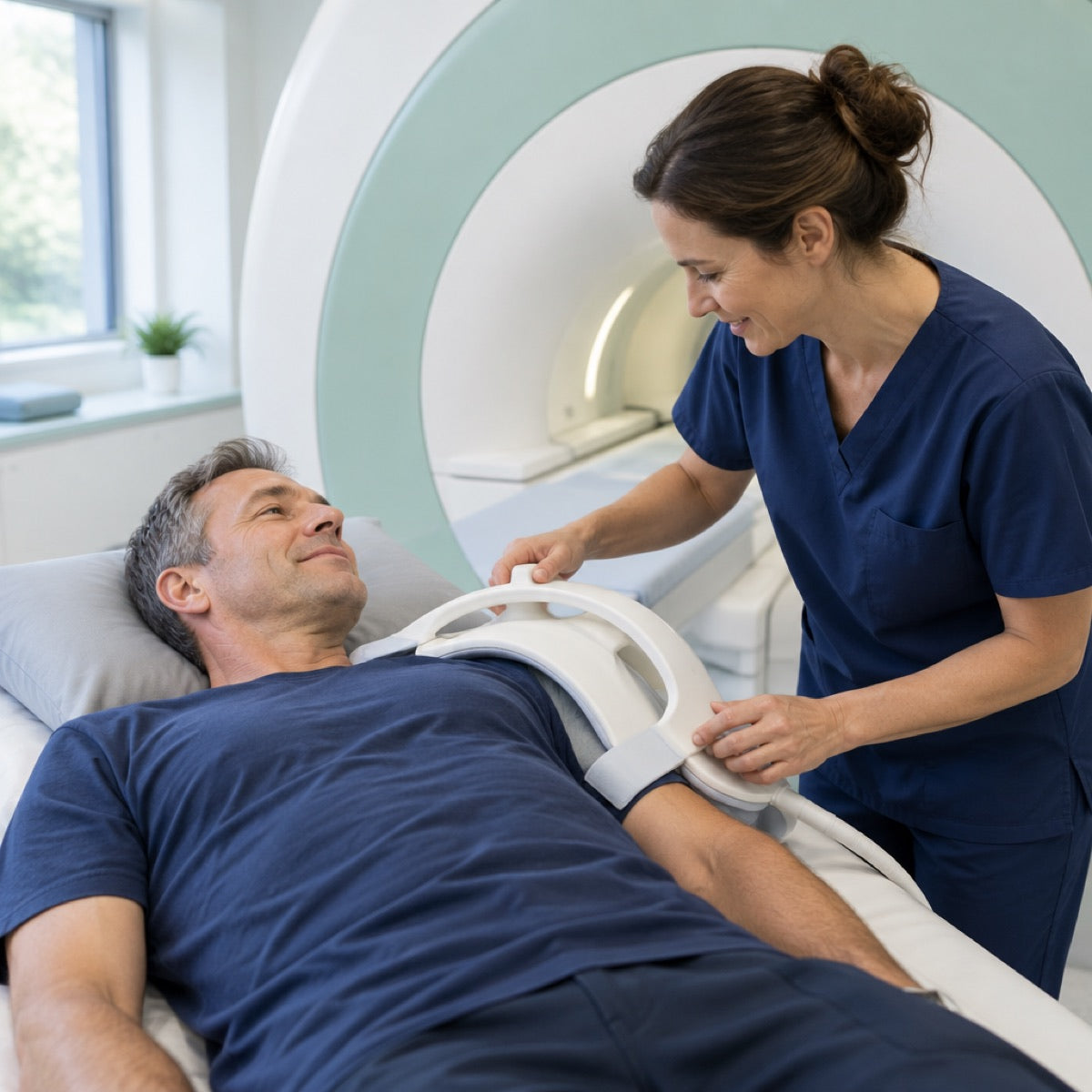
Get to the bottom of shoulder pain, weakness or instability. A private shoulder MRI at one of 60 UK imaging centres, reported by a consultant radiologist, with your report and images emailed within 3 to 5 working days. £395 for one shoulder, £595 for both. No GP referral needed, and appointments are typically within 7 days.
Choose your shoulder, then your nearest centre and date
Prefer to talk it through? Call 01225 444 144 · Mon–Fri 9am–5pm
The shoulder is the most mobile joint in the body and relies on soft tissue for stability. MRI shows those tendons, cartilage and ligaments in detail.
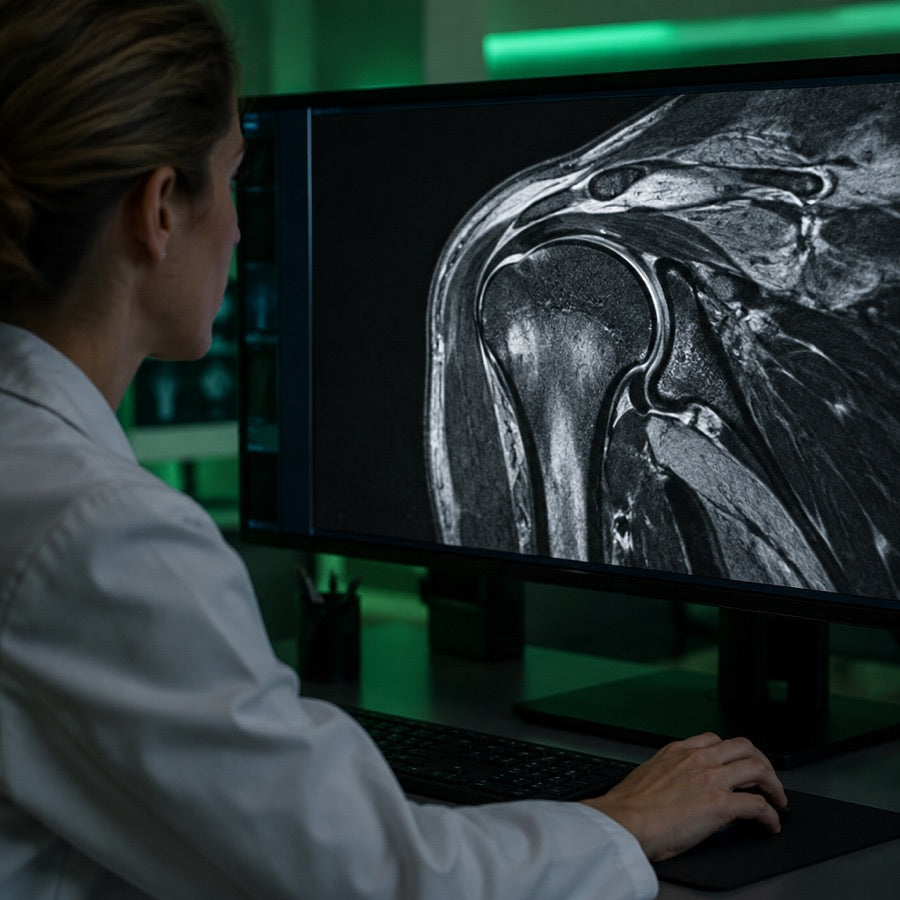
Partial and full-thickness tears of the four tendons that lift and rotate the arm, a common cause of pain and weakness.
Tendons pinched under the bony tip of the shoulder, and inflammation of the bursa that cushions them.
Damage to the cartilage rim of the socket, including SLAP and Bankart tears after a dislocation.
Degeneration, thickening or calcium deposits in the rotator cuff and biceps tendons.
Wear in the main shoulder joint and the AC joint at the top of the shoulder.
Usually diagnosed from your symptoms, but MRI can show capsule changes and rule out other causes of stiffness.
Shoulder or arm pain with chest pain, breathlessness or sweating can be a sign of a heart problem: call 999. A shoulder that has just dislocated needs A&E, not a scan.
Choose your shoulder, pick an imaging centre near you and your preferred date. Appointments are typically within 7 days, and no GP letter is needed.
Lie still on the scanner table for 20–45 minutes while images are taken. It’s noisy but painless, with no injection and no radiation.
A consultant radiologist reports your scan. Your report and images are emailed within 3–5 working days, and a clinician calls if anything needs attention.
A private shoulder MRI at Goodbody costs £395 for one shoulder, or £595 for both shoulders scanned in the same appointment. The price includes the clinical referral, the scan, a consultant radiologist’s report and your images, with a clinician call if anything needs attention. Pay in 3 interest-free instalments with Clearpay if you prefer.
No. Book directly with Goodbody and we arrange the clinical referral the imaging centre needs, so there is nothing to ask your GP for. During booking you tell us briefly why you need the scan, so the radiologist knows what to look for.
Most shoulder MRI scans take 20 to 45 minutes in the scanner, and a shoulder is towards the shorter end of that range. Allow extra time to arrive and complete the safety checklist. You lie on your back with your arm by your side and need to keep still while the images are taken.
For a shoulder scan your head and upper body are inside the scanner, with the shoulder being scanned positioned near the centre. The scanner is open at both ends and well lit, and you can speak to the radiographer throughout. Tell us when you book if enclosed spaces worry you.
Most shoulder strains improve within a few weeks with rest and physiotherapy. An MRI is worth considering if pain or weakness persists beyond that, if you can’t lift your arm properly after an injury, or if your shoulder has dislocated or feels unstable, as these can point to a tendon or labral tear.
Ultrasound is good for looking at the rotator cuff tendons and bursa. MRI shows the whole joint, including the labrum, cartilage, ligaments, bone and the deeper parts of the tendons, so it gives a more complete picture, especially after a dislocation or when the cause of pain is unclear.
Frozen shoulder is usually diagnosed from your symptoms and an examination. An MRI can show thickening of the joint capsule that supports the diagnosis, and just as importantly it can rule out other causes of pain and stiffness, such as a rotator cuff tear or arthritis.
A consultant radiologist reports your scan, and the written report and your images are emailed to you within 3 to 5 working days. If the report shows anything that needs attention, a Goodbody clinician calls you to explain it and how to take it to your GP, a physiotherapist or a specialist.
Tell us when you book so the centre can prepare you. The scanner is open at both ends, you can talk to the radiographer throughout and you hold a call button. For a knee, ankle or foot scan your head usually stays outside the scanner.
Usually, yes. A private MRI reported by a consultant radiologist is a valid clinical document, and GPs and NHS specialists will normally act on it rather than repeat it, as long as they can see the report and images. Occasionally a specialist will want a repeat scan to a specific protocol; that is their decision.
At one of 60 imaging centres across the UK. Enter your postcode when you book and the centres are sorted closest first, then choose your preferred date; appointments are typically within 7 days. See all our locations.
No GP referral needed. Appointments typically within 7 days.
Secure booking · No payment until confirmed
A short story from a patient who recently had their scan with us — what made them book, and how the day actually went.
Not sure if it's right for you? Our team is happy to talk it through, no pressure.
